This analysis by Pikasa Analytics leverages our advanced media monitoring and social listening platform, Analytics.Live, to examine how private hospitals in Türkiye build trust in the competitive medical tourism market. By tracking digital performance across media and social platforms, we uncover key trends in cosmetic surgery, patient experience, and healthcare communication. The insights highlight how leading hospitals position their expertise, attract international patients, and strengthen their global visibility through data-driven strategies in medical tourism.
In the increasingly competitive landscape of medical tourism, trust has become a decisive factor influencing patient choice. Before making decisions about treatment abroad, potential patients rely heavily on digital signals, ranging from media coverage to social media presence , to assess credibility, expertise, and service quality. Turkish private hospitals, as on of the key players in global medical tourism, have developed a multi-channel communication approach aimed at building this trust well before direct patient contact occurs.
This analysis of Pikasa Analytics, explores how these hospitals construct and communicate trust across different digital environments, with a particular focus on the interplay between owned channels (social media) and earned media (news coverage). By examining differences in content strategy, narrative framing, and audience engagement, the analysis aims to identify how perception is shaped and which communication patterns contribute most effectively to positioning Turkish hospitals as reliable and attractive destinations for international patients.
Private hospitals in Türkiye maintain a consistent presence across both traditional media and their official social media platforms; however, the nature and strategic intent of the content differ significantly between these channels. On social media, hospitals primarily adopt a controlled and proactive communication approach, focusing on health education, showcasing medical expertise, and promoting service offerings. This content is designed to build long-term credibility, reinforce institutional authority, and create a sense of transparency and accessibility for prospective patients.
In contrast, media coverage tends to be more event-driven and selective, emphasizing high-impact medical procedures, cases involving public figures, and developments that carry broader public or news value. As a result, the narrative in media is often shaped by elements of significance, novelty, or human interest, rather than continuous institutional positioning.
This analysis examines how private hospitals are represented across these two communication spheres, focusing on content typologies, engagement dynamics, and platform-specific strategies. The findings are based on data collected through Pikasa Analytics’s Analytics.Live, a real-time monitoring platform that enables comprehensive tracking of media and digital performance.
Facebook builds awareness, Instagram builds interaction
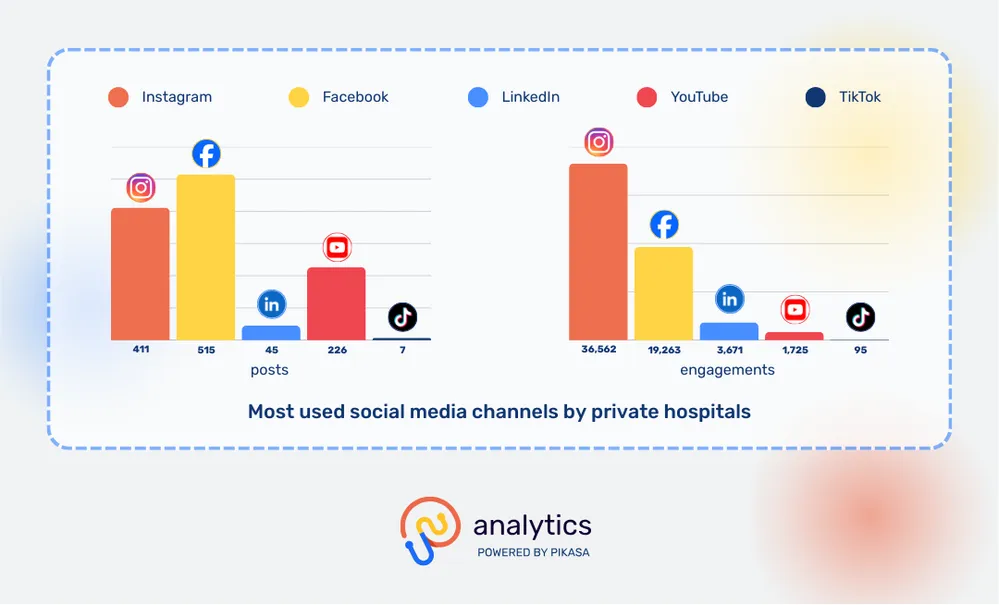
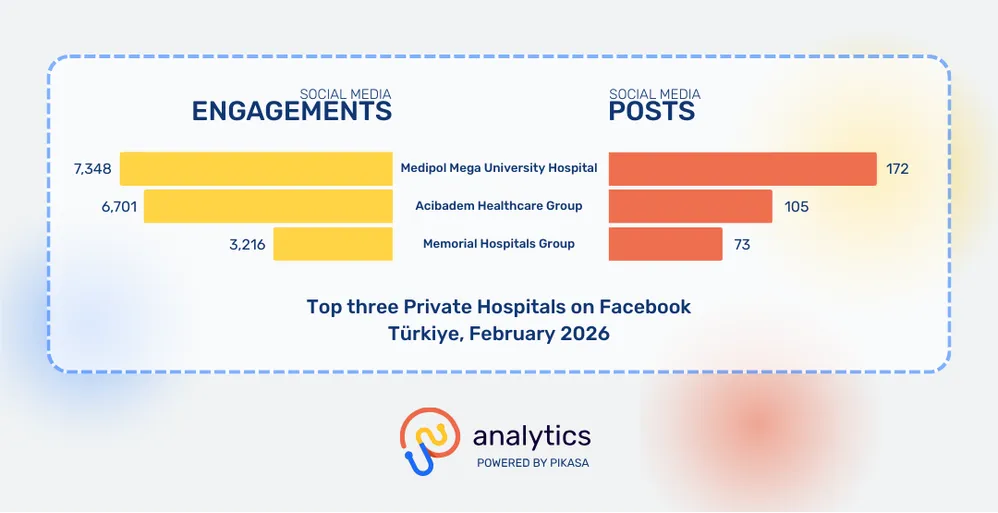
Facebook serves as the primary channel for information and continuity, accounting for 43% of all social media posts. Hospitals use it to share regular updates, health advice, doctor announcements, and institutional news, positioning the platform as a space for steady, informative communication. Among the most active hospitals on Facebook are Medipol Mega University Hospital, Acıbadem Healthcare Group, and Memorial Hospitals Group.
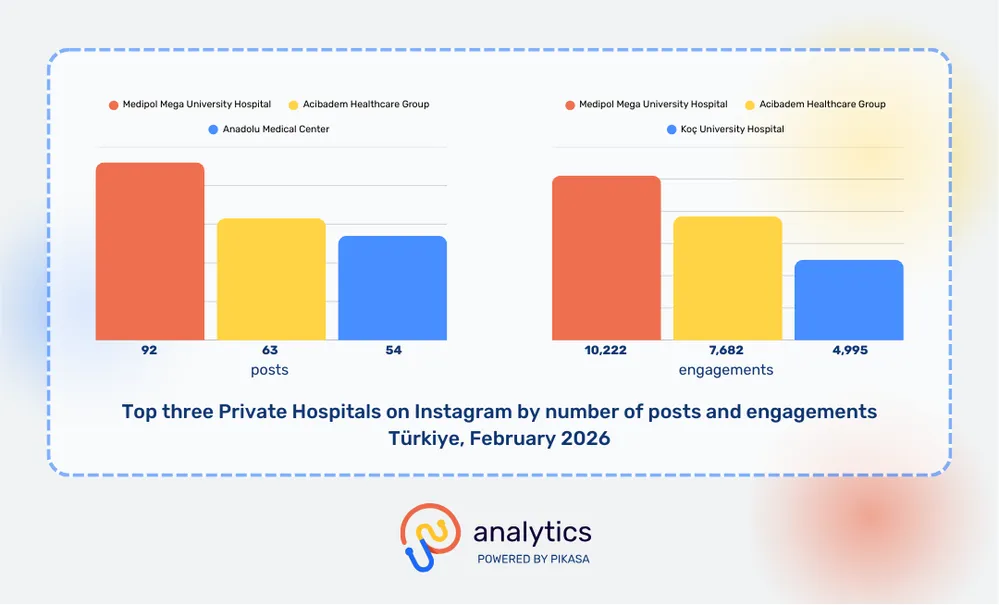
Instagram, however, shows stronger performance in terms of audience response, generating 60% of total interactions. Its strength lies in more visual and engaging content, particularly posts featuring doctors, treatments, hospital facilities, and patient recovery stories. On this platform, Koç University Hospital, Medipol Mega University Hospital, and Acıbadem Healthcare Group stand out for their ability to attract higher interaction.
Taken together, the data suggests a clear platform dynamic: Facebook is primarily used to inform and maintain visibility, while Instagram is more effective in driving engagement and strengthening connection with audiences.
Most used social media channels by Private Hospitals
Top three Private Hospitals on Facebook
Top three Private Hospitals on Instagram
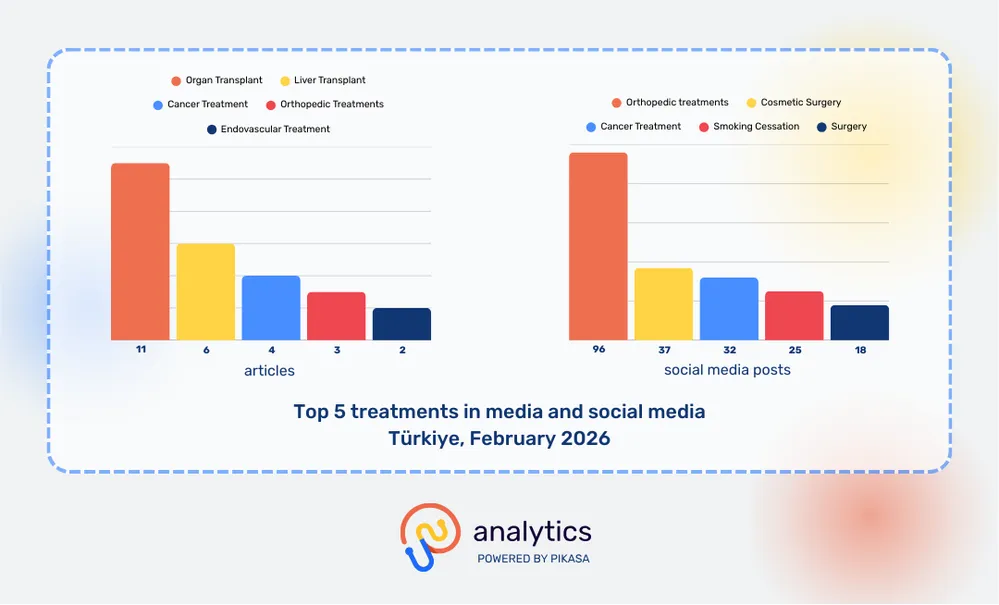
From expertise to headlines: hospitals vs media
Medical treatments emerge as the most dominant content category across both social media communication and media coverage of private hospitals in Türkiye, highlighting their central role in shaping public perception and trust. On social media, 54.2% of all posts are focused on treatments and therapies, with orthopedic treatments leading (96 posts), followed by cosmetic surgery (37) and cancer treatments (32). This content is typically framed through expert-led explanations, educational formats, and patient recovery narratives, allowing hospitals to simplify complex procedures and position themselves as accessible and authoritative sources of medical expertise.
In media coverage, the emphasis on treatments is even more pronounced, though more selective in nature. Out of a relatively limited volume of hospital-related coverage (59 articles in February), 66.1% focus on medical procedures. The most frequently covered topics include organ transplants (11 articles), liver transplants (6), and cancer treatments (4). Unlike social media, where the goal is continuous education and engagement, media outlets tend to prioritize high-impact, complex, and often life-saving procedures. These cases inherently carry greater news value and public interest, reinforcing the perception of hospitals as centers of advanced and specialized care.
Health advice lives on social, drama lives in the media
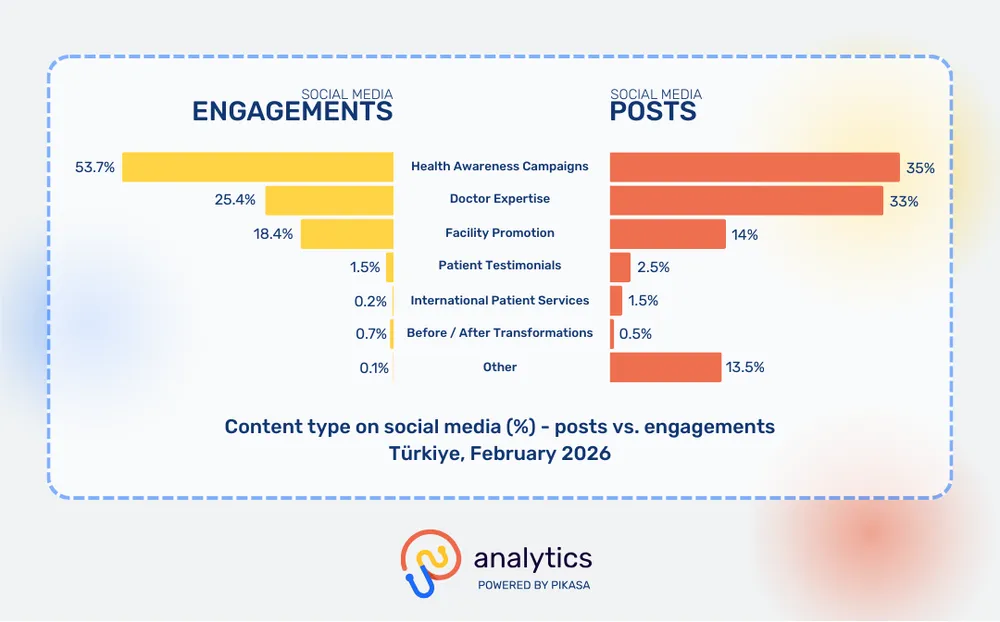
A further distinction between hospital communication and media coverage is evident in the treatment of preventive healthcare content. On social media, health awareness campaigns represent the most prominent content category, generating 421 posts and over 31K engagements. This content is typically centered on practical, everyday health guidance, including nutrition advice, disease prevention, lifestyle recommendations, and simplified explanations of common medical conditions. Through this approach, hospitals position themselves as continuous sources of value, supporting audience education and long-term engagement.
In contrast, preventive health topics receive minimal visibility in traditional media. Only 12 articles reference similar themes, generating negligible engagement. This disparity reflects a fundamental difference in content logic: while social media favors accessible, utility-driven information that audiences can apply in daily life, media outlets prioritize stories with higher news value. As a result, preventive healthcare remains largely confined to owned digital channels, where its relevance and impact are significantly stronger.
Celebrity cases make headlines, expertise builds engagement
Media coverage of hospitals tends to intensify when medical events involve public figures or high-impact developments. Within the monitored dataset, doctor expertise appears in 24 news articles, generating 686 engagements, making it the most frequently covered topic in media outlets. In this context, doctors are primarily positioned as authoritative voices interpreting major medical events, rather than as educators providing general health guidance.
A representative example is the organ transplant surgery of actor Ufuk Özkan, which generated multiple headlines across outlets. Coverage followed the case across different stages, from the announcement of the procedure to updates on recovery, illustrating how celebrity health stories can rapidly elevate hospitals into headline-driven visibility.
In contrast, social media reflects a more consistent and education-focused use of medical expertise. Hospitals regularly present doctors as accessible specialists, explaining treatments, conditions, and procedures directly to audiences. Content related to doctor expertise generated 399 posts and over 14.7K engagements, making it one of the most effective and engaging categories across hospital-owned channels. This highlights a clear distinction: media leverages expertise to interpret major events, while social media uses it to build ongoing trust and credibility.
Hospitals show outcomes, media tells the story
Patient stories represent a key point of convergence between hospital communication and media coverage, serving as a powerful driver of visibility across both channels. In media outlets, 7 articles focused on patient testimonials and treatment outcomes, generating a total of 18 engagements. Although limited in volume, these stories are typically selected for their narrative strength, often involving complex procedures, rare conditions, or significant recovery journeys that enhance their news value.
On social media, patient-related content is more frequent and generates stronger interaction. Patient testimonials account for 30 posts and 847 engagements, while before-and-after transformation stories appear in 6 posts, generating 402 engagements. These narratives are commonly presented as recovery journeys, highlighting improvements in mobility, health, and overall quality of life, making them both relatable and impactful for audiences.
The difference lies in framing: hospitals emphasize clinical success, medical expertise, and positive outcomes, positioning these stories as proof of capability and trust. In contrast, media outlets focus more on the human interest dimension, amplifying the emotional and narrative aspects of patient experiences.
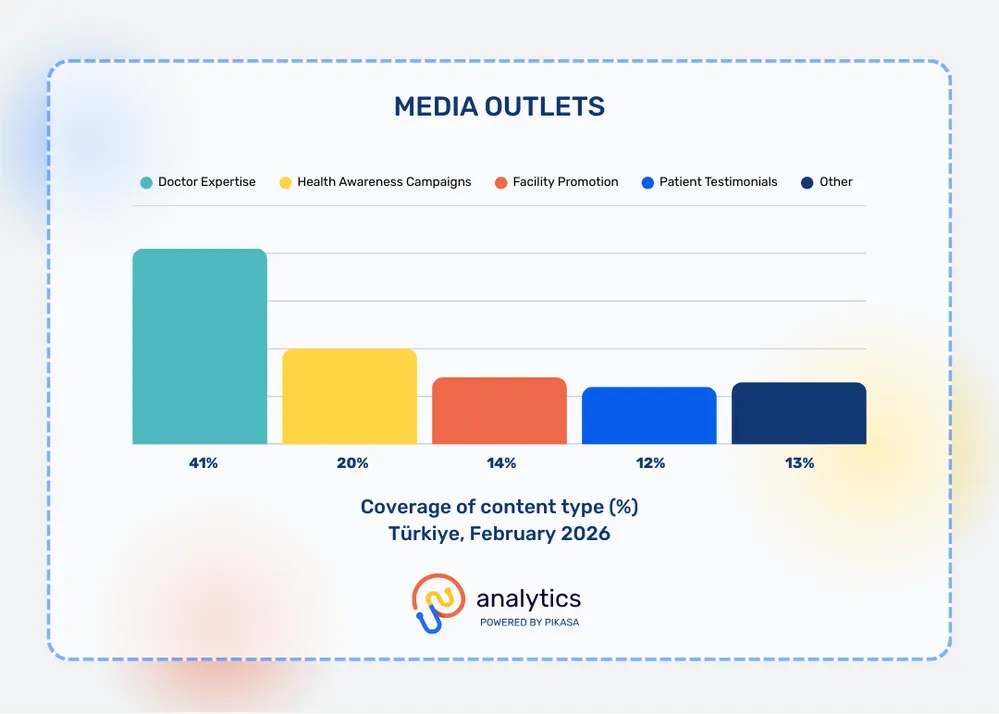
Coverage of Content Type in percentage
Media Outlets (news coverage)
Social Media
English content as a marker of international positioning
A smaller but strategically important share of hospital communication is directed toward international audiences. 12.6% of all social media posts are published in English, indicating a deliberate effort to reach patients beyond the domestic market. This content typically highlights treatments, medical expertise, and hospital facilities in a format that is accessible and relevant to international audiences. Through this bilingual approach, hospitals extend their visibility and position themselves within the global healthcare landscape, aligning with their broader objective of attracting medical tourism.
Key takeaway: Trust travels before patients do
The data indicates that private hospitals in Türkiye use social media primarily as a tool for credibility building rather than direct promotion. Content is largely centered on health awareness, doctor expertise, and treatment explanations, enabling hospitals to position themselves as reliable and authoritative actors within the public health space. This consistent, education-driven approach supports the gradual development of trust among potential patients.
In parallel, media outlets play a complementary role by amplifying high-impact medical events, including complex procedures and celebrity health cases, which generate broader public visibility. Together, these two communication ecosystems operate in synergy: social media builds long-term trust through expertise and continuity, while media coverage amplifies key moments that capture attention and reinforce institutional credibility.
Overall, the findings suggest that Turkish private hospitals have developed a balanced communication model where trust is built gradually through consistent, educational content, while visibility is amplified through high-impact media coverage. This dual approach allows hospitals to strengthen credibility before patients make decisions, positioning digital presence not just as promotion, but as a strategic foundation for attracting international demand in medical tourism.
Written by
Meriton Nagavci
March 19, 2026