Pikasa Analytics (Analytics.Live), January 2026 - what the data reveals about operator communication, channel power, and public belief.
Serbia’s commercial 5G rollout has created more than a technical upgrade, it has triggered a competition for trust, leadership, and consumer attention. In January 2026, Pikasa Analytics (via Analytics.Live) monitored telecom-related content across earned media and social platforms to measure where operators gain visibility, where they generate engagement, and most importantly where public perception is likely being shaped.
The core finding is simple but strategic: earned media (media articles) still builds scale and legitimacy, but social media builds belief and behavior. Operators that treat these arenas interchangeably are leaving influence on the table.
The analysed dataset includes 2,296 items, published in January 2026: 1,687 media articles and 609 social posts/videos across Instagram, TikTok, and Facebook. Metrics reviewed include impressions/views, engagements, and brand visibility in editorial coverage.
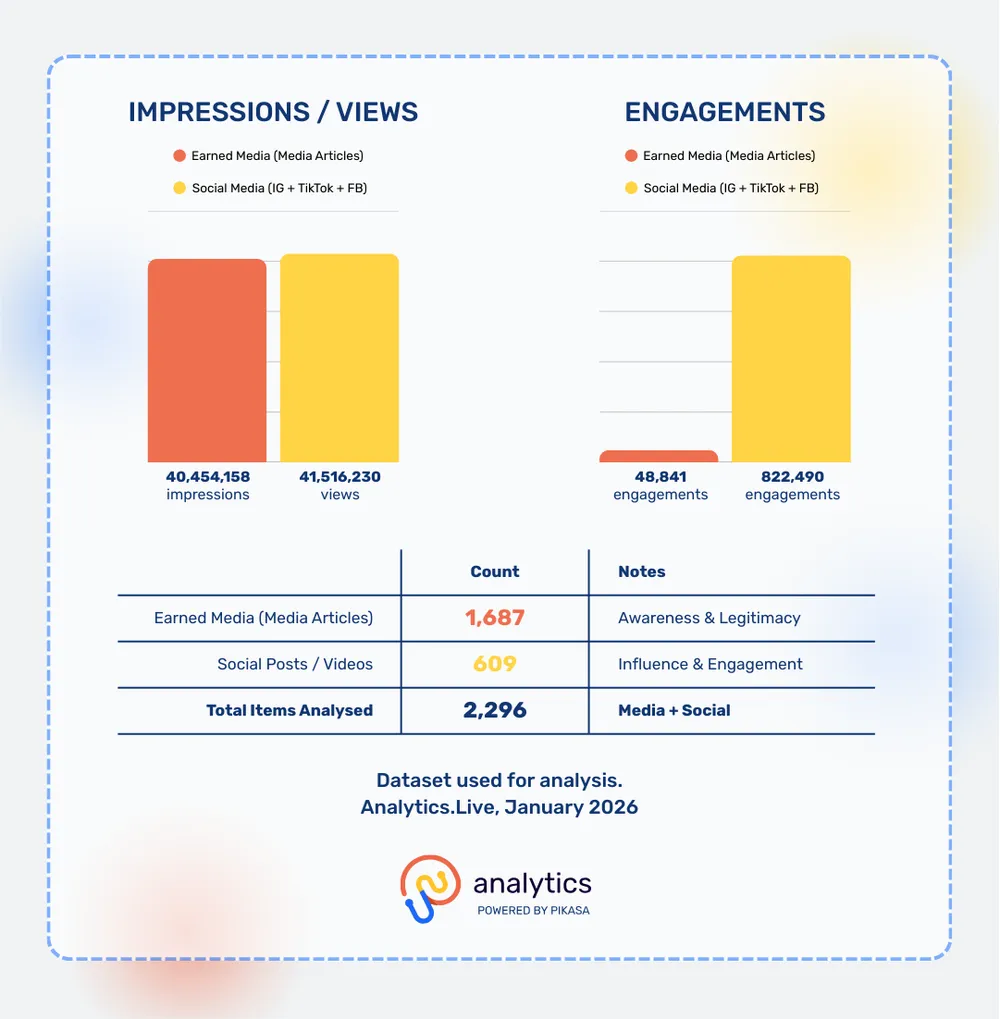
Mainstream media remains the primary “awareness engine”. In January 2026, telecom-related articles generated 40,454,158 impressions, a level of scale that social platforms rarely match in a short time window. But the same articles produced only 48,841 engagements, signaling a low ‘interaction density’: audiences see the message, yet they do not meaningfully interact with it.
Social platforms reverse the equation. Combined Instagram, TikTok, and Facebook content delivered 41,516,230 views and 822,490 engagements. That gap matters: engagement is where users “demonstrate interest”, “signal trust”, and “amplify messages to peers”. In other words, earned media provides the stage; social decides how the audience reacts.
Not all social platforms play the same role. The data shows a clear hierarchy in how audiences respond to operator content.
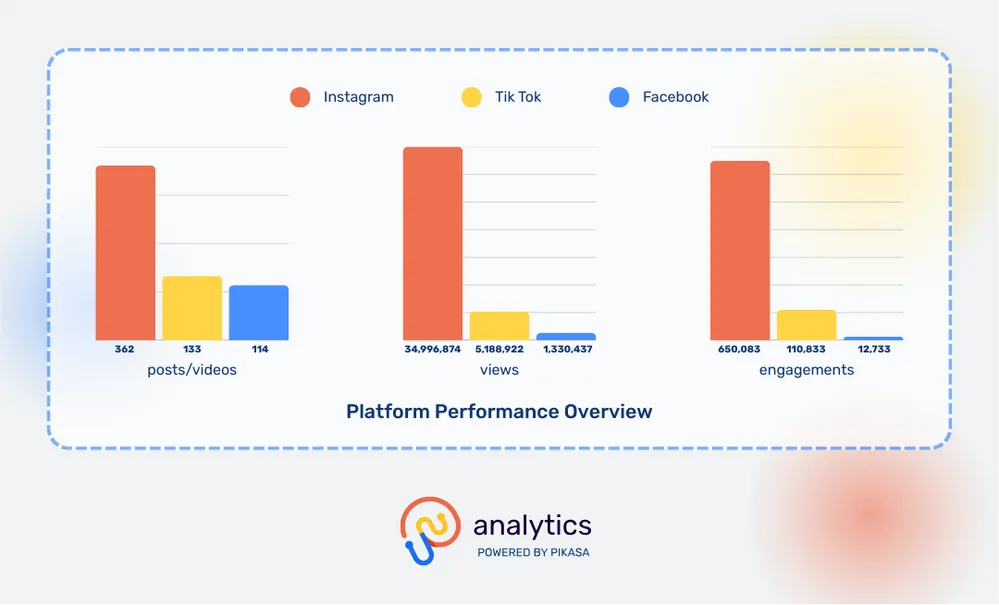
Platform Roles: Identity, Proof, and Authority
Instagram’s performance suggests that visually consistent storytelling, influencer-adjacent formats, and ‘launch theatre’ content are key drivers of interaction. In a 5G context, Instagram is where operators can attach 5G to modernity, lifestyle, and brand prestige, turning technology into identity.
TikTok, meanwhile, behaves like a drive engine. Short-form, native demonstrations, speed tests, real-life scenarios, and informal explanations, help resolve the public’s core question during early rollout phases: “is this 5G real and does it change my experience?”
Facebook’s numbers point to a different function: it is efficient for operational communication (offers, availability, customer updates), but it is not the arena where high-intensity belief formation happens.
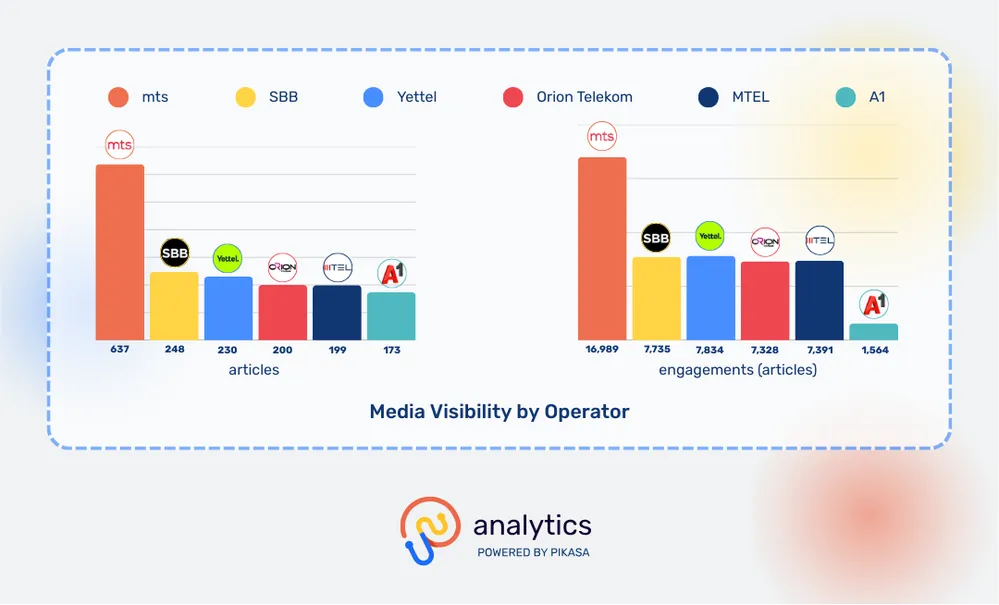
Editorial coverage does more than inform, it creates a public hierarchy. When one operator dominates earned media, it can generate a “default leader” effect: stakeholders and consumers begin associating visibility with capability, investment capacity, and national relevance.
This distribution indicates that the competition for “leadership status” is strongly linked to editorial presence. However, leadership framing becomes fragile if it is not reinforced by consumer-facing proof on social, where users validate, compare, and share experiences.
Where Visibility Becomes Belief
Pikasa Analytics shows that “Earned media” plays the strongest role in explaining the macro-story: licensing, rollout milestones, investment, and national digital readiness. This matters for public understanding, but it rarely resolves micro-questions that drive adoption: coverage in a specific neighborhood, device compatibility, plan differences, and practical benefits.
Perception is formed where audiences interact. Instagram shapes meaning through identity and aspiration. TikTok shapes trust through demonstration “I can see the speed; I can see the difference.” When these two forces align, operators convert visibility into belief.
Promotion is strongest when storytelling is paired with utility. Social creates demand; owned channels (web/app/retail communication) capture it. Without a conversion bridge, clear plan pages, coverage check tools, device bundles, and transparent pricing - high engagement can remain ‘attention’ rather than adoption.
Why Visibility Alone Is No Longer Leadership
The results of Pikasa Analytics conclude that in In January 2026, Serbia’s 5G narrative is clearly being constructed in two parallel arenas with two different logics of influence. Earned media is where legitimacy is negotiated: it sets the hierarchy of “who leads,” anchors 5G in national priorities, and frames operators as infrastructure actors through investment and rollout language. But that legitimacy is largely symbolic - it defines status and credibility more than it changes consumer behaviour. Social platforms, by contrast, operate as the market’s verification layer.
This is where claims are tested through demonstrations, experience cues, and peer-driven amplification. Here, audiences do not simply receive information; they interpret it, react to it, and crucially decide whether they believe it.
This split means that 5G communication is no longer a single story delivered everywhere. It is a narrative system in which each channel performs a distinct function in the formation of public perception. Earned media establishes the “official” meaning of 5G - progress, readiness, national modernization, while social content determines whether that meaning becomes credible and personally relevant. The operational consequence is that leadership cannot be sustained by visibility alone. Operators that dominate headlines may secure institutional authority, but if they fail to generate proof and experiential clarity in social environments, their leadership frame remains vulnerable to doubt, comparison, and switching dynamics.
Pikasa Analytics: Understanding How Public Belief Is Built
So the January 2026 analysis is not merely a snapshot of communications activity; it is a map of how 5G belief is communicated in Serbia. The way how public perception is formed where legitimacy (earned media) meets verification (social proof) and where both converge into understandable, actionable consumer meaning. Operators that internalize this as a structured narrative system, rather than a one-message campaign, are the ones most likely to consolidate trust, defend leadership positioning, and translate attention into sustained adoption.
Written by
Natasha Dimova
February 18, 2026